
What on Earth is a DRV Valve?
If you’ve ever taken a look at a Mercedes-Benz Sprinter, a C-Class CDI, or any modern diesel engine, you’ve probably heard of the DRV Valve. DRV stands for Druckregelventil in German, which simply translates to Fuel Pressure Regulator Valve,Common Rail System. If the fuel metering valve (IMV) we talked about earlier is the "intake guard" that controls how much fuel enters the pump, the DRV is the "high-pressure executioner" sitting directly on the fuel rail. Its job is heavy and high-stakes: dealing with fuel that has already been crushed to extreme pressures and making sure it doesn't over-pressurize and blow the system apart. Think of it like the ultimate pressure cooker safety valve, but one that reacts in milliseconds.
Spotlight on a Classic: The 0281002241
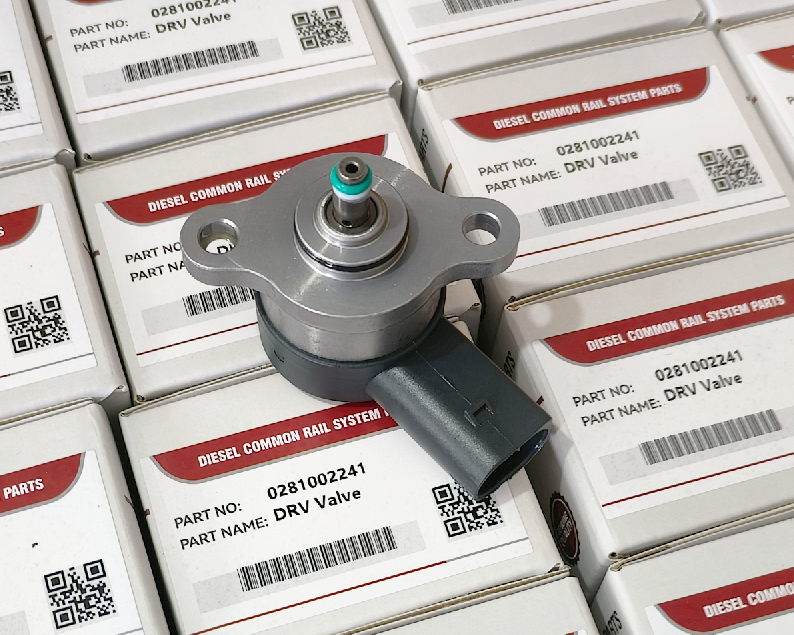
Let’s talk about a legend in the aftermarket and OEM world: part number 0281002241. If you run a repair shop or stock diesel parts, this Bosch-type number is likely a frequent visitor on your shelves. This specific DRV valve is the heartbeat of older, bulletproof Mercedes-Benz OM611, OM612, and OM668 engines (found in classic A-Class, C-Class, E-Class, and the legendary Sprinter vans). When these vehicles refuse to start or cut out under load, seasoned mechanics don't guess—they instantly check the 0281002241. It is the perfect example of how a tiny mechanical needle, driven by magnetic force, keeps a heavy-duty commercial van pulling tons of cargo smoothly down the highway.
How It Works?
Inside the DRV valve, there’s a heavy-duty spring and an electromagnetic coil pushing a tiny, super-hard ball or needle into a valve seat.
When the engine is off or starting: The mechanical spring pushes the valve closed to help the system build up starting pressure quickly.
When running (The Techy Part): The ECU reads the rail pressure sensor. If the pressure gets too high, the ECU sends a precise electrical current (PWM signal) to the DRV. The magnetic force adjusts the valve opening just enough to let a tiny stream of high-pressure fuel "bleed off" and return to the fuel tank. It does this back-and-forth dance hundreds of times a second to keep the rail pressure perfectly flat.
In the Workshop: Real Symptoms of a Weary DRV
Because the DRV valve deals with maximum pressure, it is highly sensitive to dirty fuel and internal wear. When a DRV (like the 0281002241) begins to fail, the car will tell you through very specific complaints:
Hard Start when Hot: The car starts fine in the morning, but after a long drive, you turn it off to grab a coffee, and it refuses to restart. Why? The warm, thinned-out diesel leaks past a worn DRV valve seat, preventing the engine from building starting pressure.
Sudden Cutting Out under Load: You are overtaking a truck on the highway, you stomp on the gas, and boom—the engine dies, and the glow plug/EDC light flashes. The worn valve couldn't hold the high pressure demanded during acceleration and dumped too much fuel back to the tank.
Why YARN DRV Valves Stand the Test of Time?
We always say: a cheap DRV valve is the most expensive mistake you can make. If the internal ball and seat wear out by even 2 microns, your common rail system loses efficiency. Our replacement DRV valves, built to benchmark top-tier OE standards like the 0281002241, feature micro-finished valve seats and advanced anti-friction coatings. They don't just "fit" your fuel rail; they restore the exact hydraulic tight-seal your diesel engine needs to deliver smooth idling, crisp throttle response, and pristine fuel mileage. Don’t gamble with high pressure—trust the experts who know how to control it.
The 200% Rule: We don’t settle for "random checks."
✔️ 100% First Inspection: Full validation during the production phase.
✔️ 100% Second Inspection: Final performance verification before shipment.
-From yarndiesel-