
The Efficiency Revolution
Let’s fast forward past the old days of diesel engineering, where pumps used to ruthlessly compress every single drop of fuel they could suck in, only to dump the boiling hot excess back into the tank. That old school method was noisy, power-hungry, and frankly, a waste of energy. Enter the Volume Control Valve (VCV). If the high-pressure fuel system had a "Sustainability Director," this would be it. Sitting comfortably on the high-pressure pump, the VCV’s entire life purpose is to practice strict portion control. It calculates and slices down the exact volume of fuel entering the pumping elements. No more, no less. It’s the reason modern common rail systems can achieve
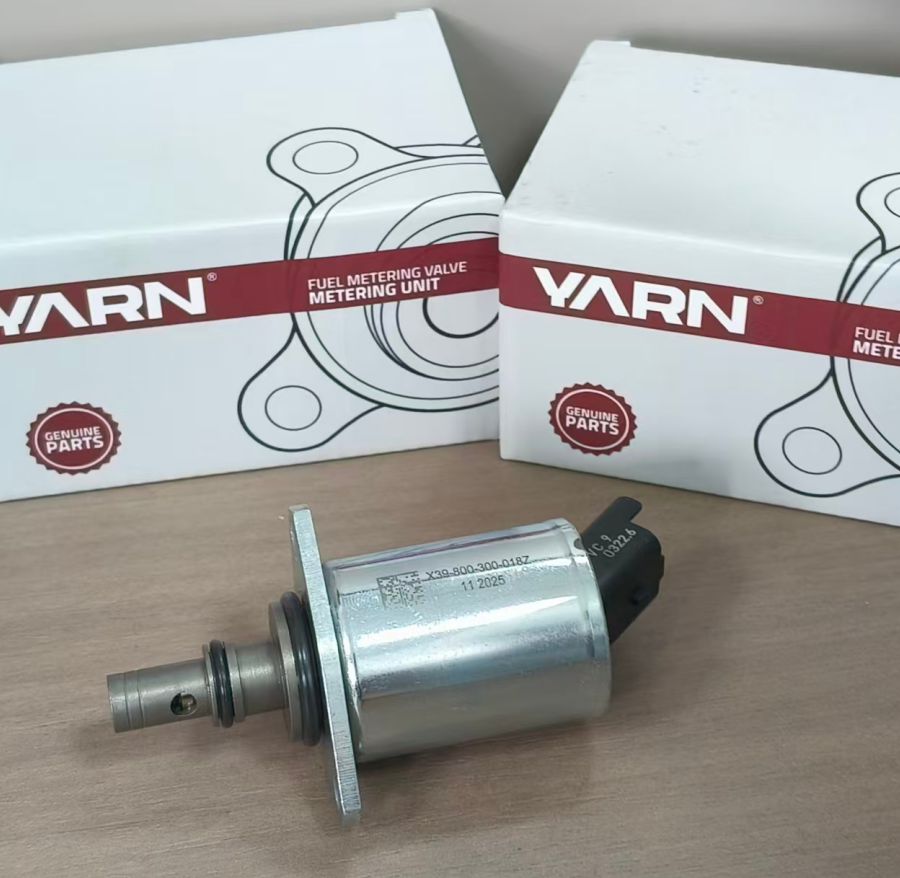
To understand the VCV, you have to appreciate the hyper-fast teamwork between the valve and the Engine Control Unit (ECU). It happens in three high-tech steps:
The Live Stream: The ECU samples driving data thousands of times a second. It figures out that, at this exact millisecond, the engine only needs a tiny sip of fuel, not a full glass.
The Digital Signal: The ECU sends a high-frequency PWM (Pulse Width Modulation) current to the VCV. This isn't a simple "on/off" switch; it's a rapidly vibrating command that dictates exactly where the valve spindle should hover.
The Volume Cut: By adjusting its internal opening size, the VCV restricts the volume of fuel that the suction stroke of the pump can physically pull in. By throttling the volume early on, the pump pistons never compress air or fight against unnecessary fluid resistance.
When a VCV gets contaminated by low-grade fuel or worn out by millions of cycles, its mathematical precision goes out the window. It stops giving the engine a measured portion and starts guessing. Here is what that looks like from behind the steering wheel:
The "Lumpy" Cold Start: You turn the key in the morning, and instead of a smooth, confident purr, the engine stumbles, shakes, and clears its throat for a few minutes. A sticky VCV fails to adjust quickly to cold, thick diesel.
The Annoying Power Hesitation: You try to step out and pass a vehicle, but the engine hesitates for a split second, giving you a jerky acceleration curve. That’s the VCV valve spindle getting mechanically stuck before finally breaking free.
Unexplained Rail Pressure Spikes: If the VCV jams open, the pump suddenly swallows too much fuel, causing rail pressure to spike dangerously and triggering the vehicle’s self-defense mode (Malfuntion Indicator Light / Limp Mode).
Why True Quality is Invisible (But Essential)
Here is a little secret from our testing labs: on the outside, a cheap aftermarket VCV looks identical to a premium-tier piece of engineering. But the magic—and the cost—is hidden on the inside. To achieve seamless volume metering, the internal sliding tolerances of our VCVs are manufactured to nanoscale accuracy. We treat the internal components with high-density diamond-like carbon coatings to fight off the abrasive particles found in modern ultra-low sulfur diesel. Choosing a high-precision VCV isn't about buying a backup part; it’s about protecting your high-pressure pump from self-destruction and ensuring your fuel delivery remains razor-sharp for miles to come.
-yarndiesel-kathy