
The Common Rail Pressure Sensor is a key component in modern diesel common rail fuel injection systems. Its main function is to continuously measure the fuel pressure inside the common rail and send real-time data to the Engine Control Unit (ECU).
Based on this information, the ECU adjusts fuel injection timing and quantity to ensure optimal engine performance, fuel efficiency, and emission control.
Without accurate pressure measurement, the entire fuel injection system cannot operate properly.
The pressure sensor is usually installed directly on the common rail, where it is exposed to high-pressure fuel conditions and must maintain high precision and stability over long-term operation.
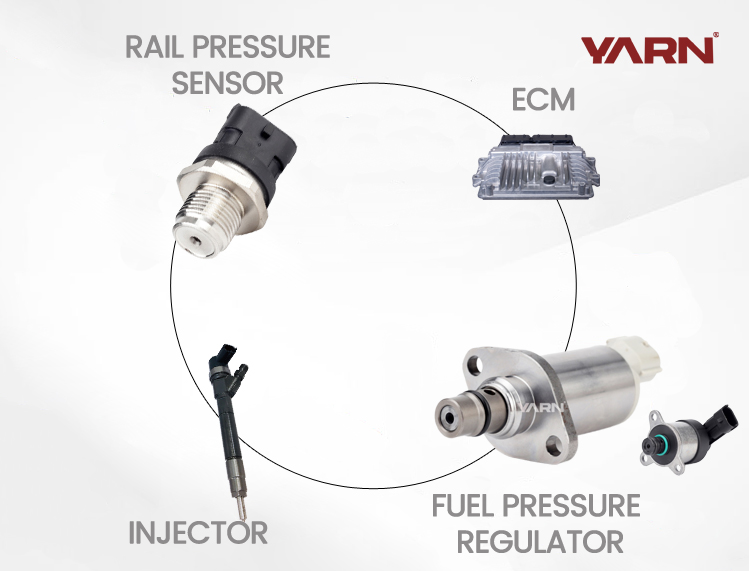
Modern diesel engines rely heavily on precise fuel pressure control. Even small deviations in rail pressure can significantly affect engine performance.
The pressure sensor plays a critical role in:
Maintaining stable fuel rail pressure
Ensuring accurate fuel injection timing
Improving fuel efficiency
Reducing exhaust emissions
Protecting engine and fuel system components
In simple terms, the pressure sensor acts as the “eyes” of the ECU in the fuel system.
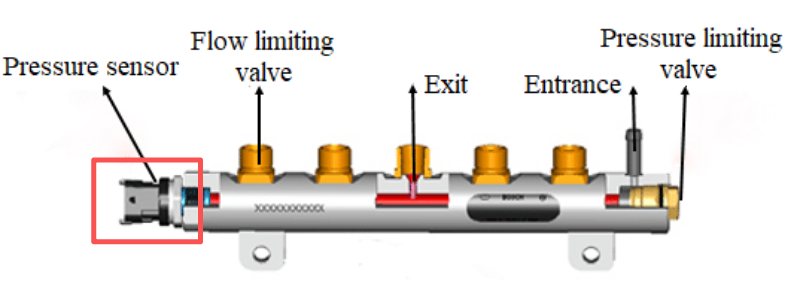
Note: The above Image indicates that the sensor is located at one end of the CRD fuel rail. Some earlier and later CRD systems utilise a PCM controlled pressure regulating device at the other end of the fuel rail.
The FRS is generally a piezo resistive type sensor that monitors the fuel pressure in the fuel rail as a varying voltage, which is utilised by the PCM as part of the calculation for the % duty cycle control for the Rail Pressure Control Solenoid (or Fuel Metering Solenoid or Suction Control Valve) to maintain a suitable rail pressure under all driving conditions. (current CRD systems now reach max pressures over 200MPa).
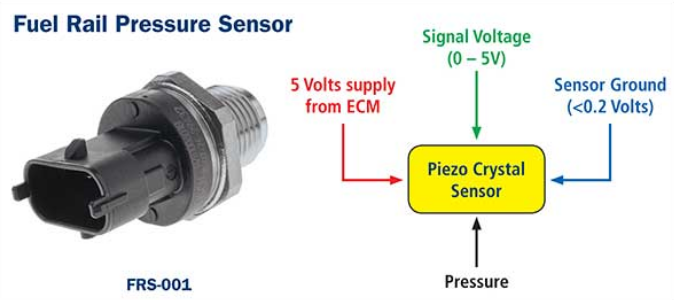
Example Bosch EDC 16 system.
Typical signal voltages from rail pressure sensor:
Engine stationary: approximately 0.5 volts.
Engine idling: approximately 1.32 volts.
Snap acceleration: approximately 3.77 volts +
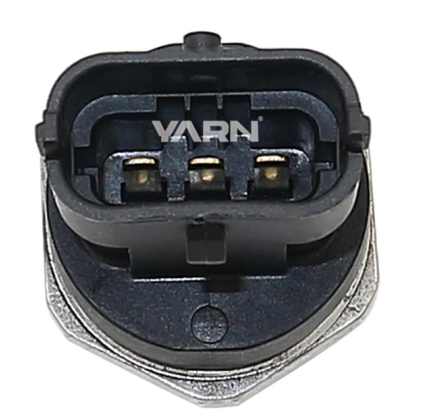
Error Codes:
Two common error codes relating to Fuel Rail Sensors on a CRD that may be logged are:
P0193 – Fuel Rail Sensor circuit high input. The PCM has detected that the fuel pressure is not within the predetermined range.
P0087 – Fuel Rail Pressure too low. Generally, a problem with the fuel delivery system that causes the pressure to be too low.
Even though the GDI (Gasoline Direct Injection) rail pressures vary to the CRD systems, the function of the rail pressure sensor is similar.
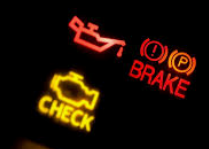
Common reasons include:
Dirty fuel can damage internal sensing elements.
Wiring harness damage or connector corrosion can affect signal transmission.
Long-term exposure to high temperature and engine vibration may reduce sensor accuracy.
Over time, internal components may degrade and lose sensitivity.
Proper diagnosis is important before replacement.
Use a diagnostic scanner to read pressure-related fault codes and live data.
Check whether the sensor output voltage is within the specified range.
Inspect connectors for corrosion, looseness, or damage.
Compare actual rail pressure with ECU target pressure.
Large deviations may indicate sensor failure.
Replacement is recommended when:
Persistent fault codes appear
Engine performance drops significantly
Pressure readings are unstable or incorrect
Electrical testing fails
Mechanical damage is found
Using a high-quality replacement sensor is essential to restore proper engine performance.
YARN is a professional manufacturer specializing in fuel pressure control valves and rail pressure sensors for diesel common rail systems.
Over 10 years of manufacturing experience
IATF 16949 certified production system
200% testing before shipment
1,000+ models covering Bosch, Denso, Delphi, VDO applications
High precision and stable performance
private label manufacturing support
Strong aftermarket supply capability
Every YARN pressure sensor is designed to ensure accurate pressure measurement and long-term durability under harsh diesel engine conditions.
Whether you are a distributor, importer or aftermarket brand, YARN can provide high-quality common rail pressure sensors tailored to your market needs.
We focus on stable quality, strict testing, and long-term cooperation with global partners.
Contact YARN today to learn more about our fuel system components solutions.
-yarndiesel-